

Things to do in Peñíscola

Peñíscola Castle
The Peñíscola Castle-Palace, also known as the Castle of Pope Luna, is located on the highest point of the rocky promontory overlooking the city, reaching a height of 64 meters above sea level. Its perimeter is approximately 230 meters, and it has an average height of 20 meters. The Knights Templar built this Romanesque structure on the remains of the old Arab citadel between 1294 and 1307. Pedro Martínez de Luna y Pérez de Gotor, who was appointed Pope by the Avignon Papacy as Benedict XIII of Avignon, known as Pope Luna, made the castle his papal seat during the long dispute over his legitimacy. Pope Luna's tenacious struggle against his enemies gave rise to the popular phrase "to stick to one's guns," referring to Benedict XIII's refusal to renounce his position as pope.
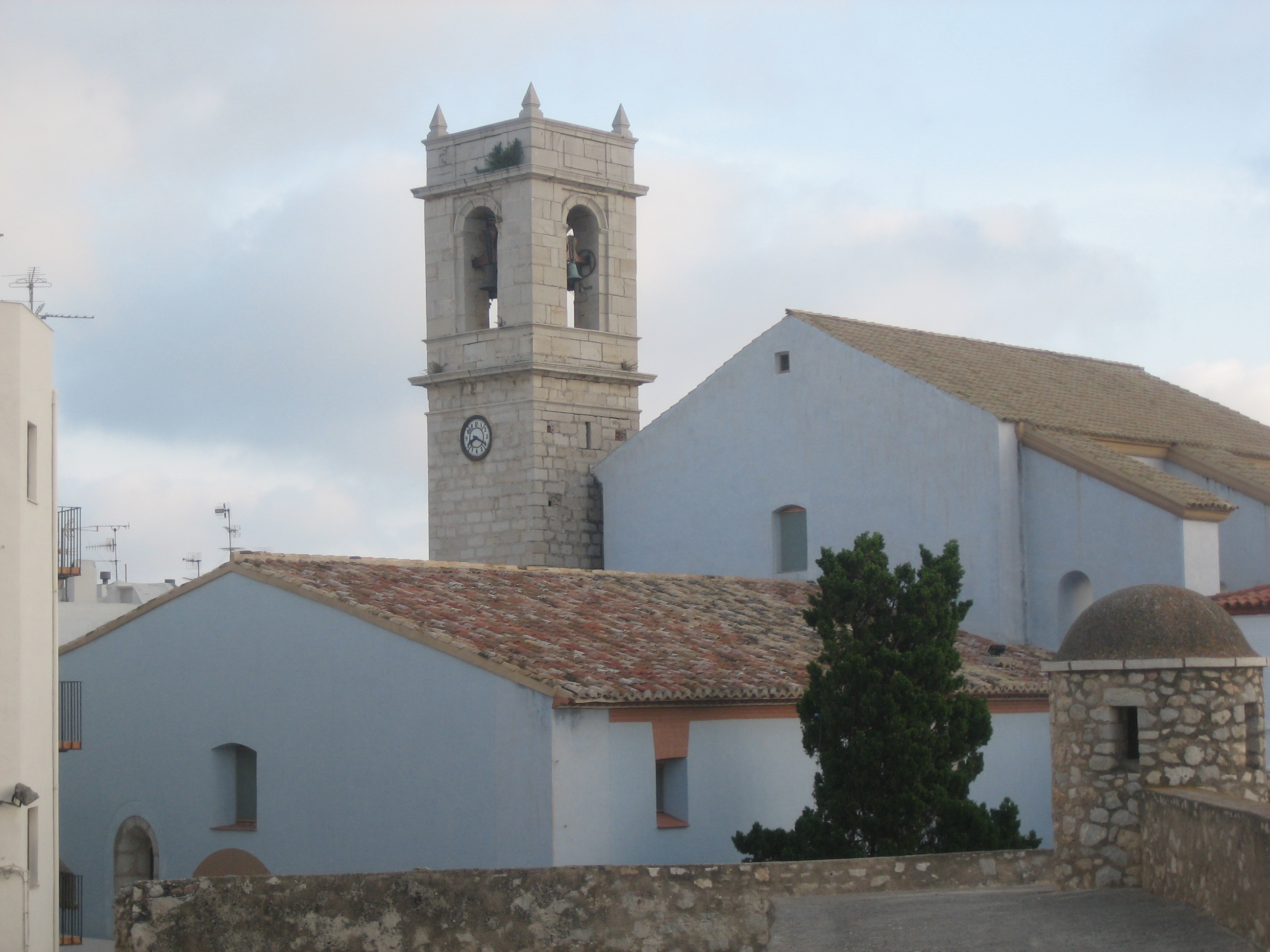
Church of Santa María
The parish church of Santa María de Peñíscola, originally Gothic in style and later expanded in Baroque, is a Catholic church located in the center of the town of Peñíscola and is the seat of a parish within the Diocese of Tortosa.
Construction began shortly after the conquest of the town, and the portal wall and portal itself remain as examples of the original church built during the repopulation period. In the mid-15th century, a fire destroyed the church, and Pope Eugene IV, at the request of Queen Maria of Castile, granted plenary indulgence to the donors for its reconstruction. At the end of the 17th century, the side chapels were covered with brick and plaster.
Between 1725 and 1739, the church was enlarged and transformed, its orientation changed, and a new apse, sacristy, and Chapel of Communion were added. The works were directed by the master builder José Antonio Simó and were completed on May 27, 1739, while the Chapel of Communion was finished on September 7, 1743.
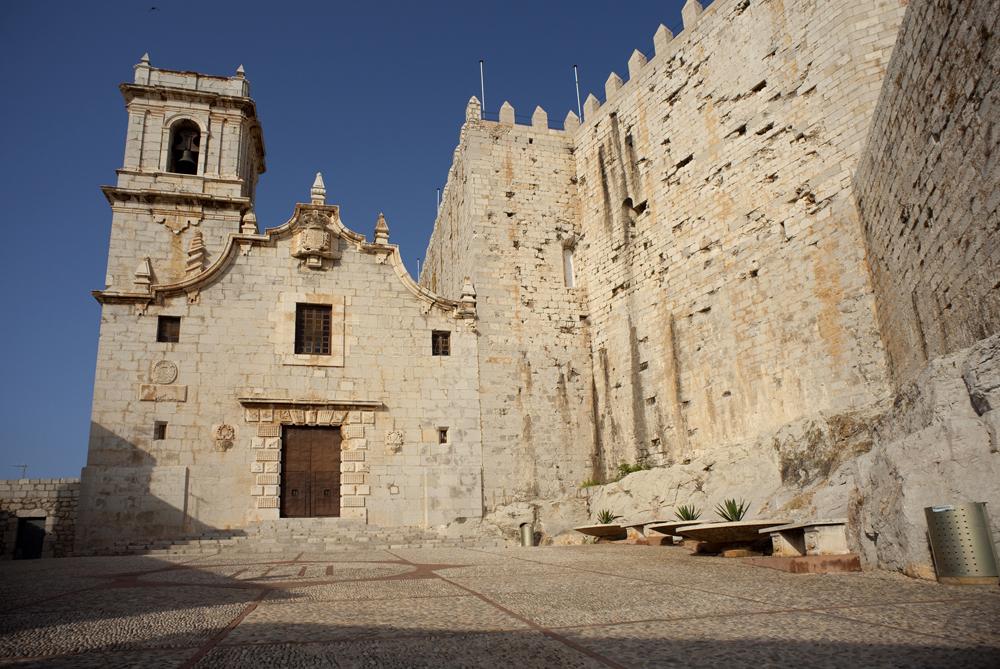
Hermitage of Our Lady of the Hermitage
The Hermitage of Our Lady of the Hermitage in Peñíscola is located atop the rocky outcrop of this city, attached to the castle.
The façade is crowned by a mixtilinear cornice with pinnacles, framing the coat of arms of Philip V. In the center, there is a doorway with a lintel featuring cushioned seats decorated with military motifs, an unusual feature in a church, but one that is justified by its origins. This cushioning is a replica of that found in the Dark Portal of the Renaissance wall.
The feast day of Our Lady of the Hermitage is celebrated on September 8 with traditional dances.
According to legend, the image was brought to the Iberian Peninsula by the Apostle James, and with the arrival of the Muslims, it was hidden in a cave, only to be recovered after the Christian conquest.
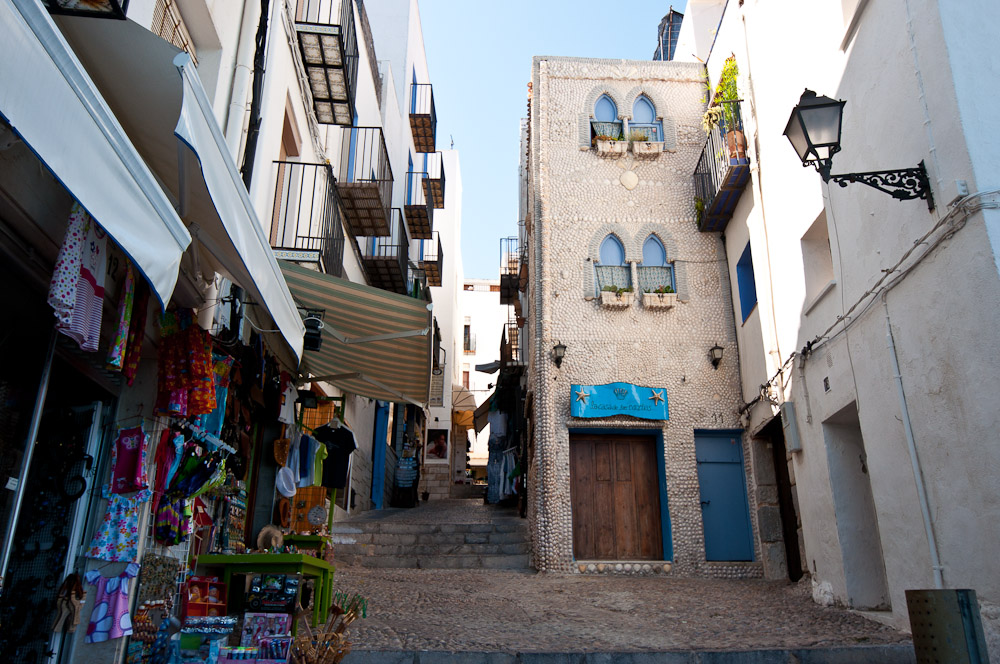
House of Shells
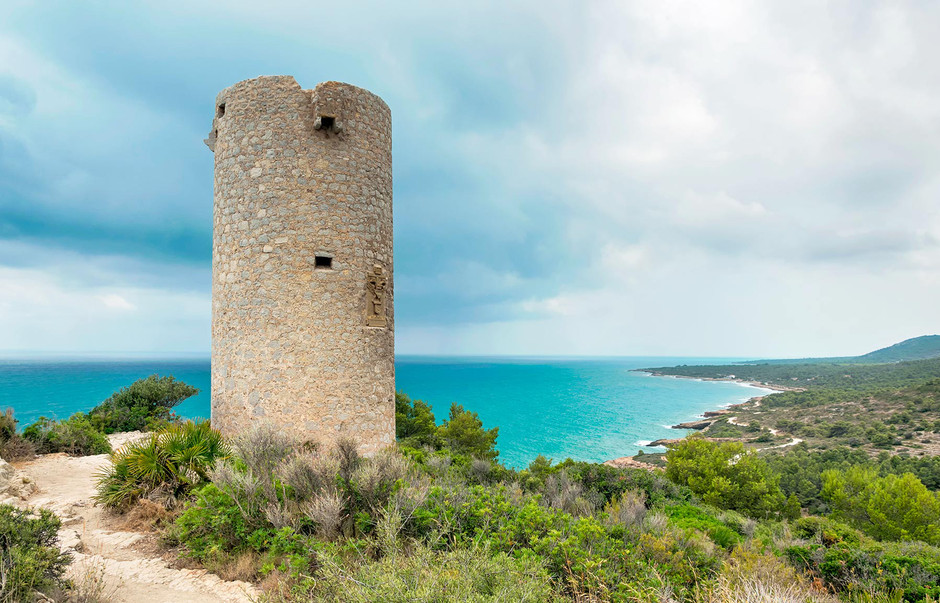
Sierra de Irta
This area, encompassing 7,743 hectares of land and 2,448 hectares of marine area, was declared a natural park by the Valencian government on July 16, 2002.
The park protects the mountain range located in the Bajo Maestrazgo region ("Baix Maestrat" in Valencian) and the coastal area in front of it.
The natural park consists of two mountain ranges with a maximum altitude of 572 meters (Campanelles Peak), parallel to the coast and separated by the Estopet Valley. Due to their proximity to the sea, the mountains descend abruptly, forming numerous cliffs, coves, ledges, and marine reefs along a 12 km stretch. The most prominent cliff is Torre Badum.